Oil markets have been jolted awake. Brent crude settled Thursday at around $96.57 a barrel, up $1.96, and climbed in Asian trading Friday to around $97.32. US benchmark WTI rose 3.11% to about $86.28. In three sessions, Brent has gained roughly 8% after weeks of drifting lower.
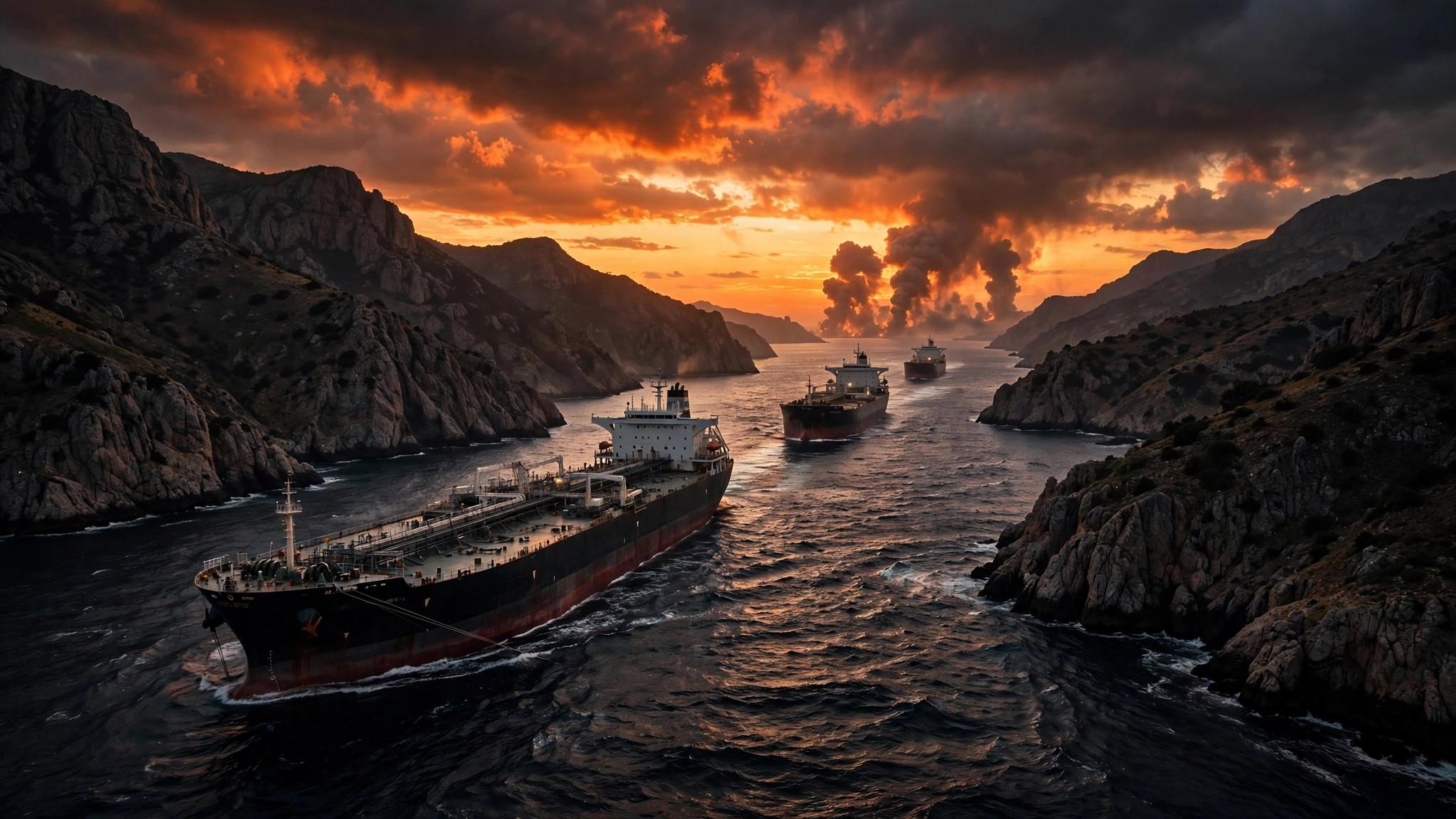
The trigger was an incident in the Strait of Hormuz, the narrow waterway carrying a huge share of the world's seaborne oil. Iran's Revolutionary Guards said two tankers crossing without permission struck mines north of Oman's Khasab port, exploded and caught fire. The ships are unnamed, but the message was unmistakable: the world's most important oil chokepoint is no longer safe.

The timing could hardly be worse. The attack comes on Black Friday, at the start of the busiest travel and shopping weekend of the year in the United States, just as inflation data has put central banks on alert. If the rally holds, it will feed through to petrol prices and transport costs — and complicate the Fed's thinking weeks before its December meeting.
What Happened in the Strait of Hormuz?
According to Iran's Revolutionary Guards, two tankers that crossed the Strait of Hormuz without permission struck mines north of Khasab port in Oman, exploded and caught fire. The vessels have not been identified, and the full circumstances are unconfirmed. The incident follows a pattern of attacks on ships in the strait and on Saudi energy sites that has been building for weeks.
The Strait of Hormuz is the artery of the global oil trade: around a fifth of the world's oil supply passes through this narrow channel between Iran and Oman. There is no easy alternative route.
Traders do not wait for certainty when the stakes are this high — they price in the risk that a wider confrontation could close the waterway altogether.
Why Are Oil Prices Surging Now?
Three forces are pushing prices higher. The first is the Hormuz incident itself, which has revived fears of supply disruption in the region that produces and ships a large share of the world's crude. Attacks on vessels in the strait and on Saudi energy facilities have raised the risk premium on every barrel.
The second is the wider regional escalation. On Thursday, a drone attack hit a Kuwaiti military air-defence surveillance site, killing two Italian technicians maintaining Skyguard detection antennas. Italy's Foreign Minister Antonio Tajani told the Senate the attack used drones of Iranian origin, although Iran denies any role. President Trump has said Pickaxe Mountain would be a target if the United States strikes Iran again.
The third force is momentum. Brent and WTI are on track for their first weekly gains in four weeks, and the 8% rise over three sessions has forced traders who bet on lower prices to buy back their positions in a hurry — short-covering that can turn a sharp move into a sharper one in thin holiday trading.
What Does It Mean for Fuel Prices?
For drivers, the impact of an oil spike is rarely instant, but it is usually inevitable. Petrol prices tend to follow crude with a lag of one to two weeks, as dearer oil works through refineries and into filling stations. Brent near $97, if it holds, points to higher fuel costs heading into December.
The effect reaches well beyond the petrol station:
Diesel and freight — trucks, ships and planes run on oil, so higher crude pushes up the cost of moving goods — costs that eventually land on shop shelves.
Heating bills — winter is approaching, and higher oil feeds directly into heating oil and natural gas markets.
Airfares — jet fuel is one of airlines' biggest costs, and a sustained rally usually shows up in ticket prices within weeks.
Holiday travel — with 81.5 million Americans travelling over Thanksgiving, higher fuel prices hit household budgets just as spending peaks.
What Does It Mean for Inflation and Interest Rates?
The oil rally is also bad news for the fight against inflation. Energy is one of the most powerful drivers of headline inflation, and a sustained rise in crude feeds into almost every price in the economy. October's PCE inflation report already came in hot at 3.8%, the highest since May, and markets now treat a December Fed rate hike as a near-certainty.
Higher oil makes that picture worse in two ways: it pushes inflation up directly through fuel and transport costs, and it squeezes household budgets, leaving families with less to spend on everything else — a mix that can slow growth while keeping prices high, leaving the Fed little room for error.
The new tariff wave being prepared against 16 economies adds another layer of upward pressure. Tariffs raise the cost of imported goods, and oil raises the cost of moving them — an inflation outlook getting worse, not better, just as the Fed prepares to decide on rates.
What Happens Next?
Much depends on the strait now. If shipping continues without further incidents, the risk premium may fade. But more attacks, or an escalating US–Iran confrontation, could push Brent through $100. Just last week, Wall Street lost around $7 trillion in value in a single week, a reminder of how quickly sentiment turns when geopolitics and markets collide.
Final Thoughts
Brent nearing $97 is more than a headline: it is a warning. Two tankers struck by mines in Hormuz have shown how fragile the oil supply chain is, and how quickly that fragility reaches families through fuel prices and transport costs. With inflation hot and the Fed about to meet, the timing could hardly be worse.
Disclaimer: This article is for informational purposes only and does not constitute financial advice. Investing involves risk, including the possible loss of principal. Readers should do their own research or consult a licensed financial adviser before making investment decisions.