
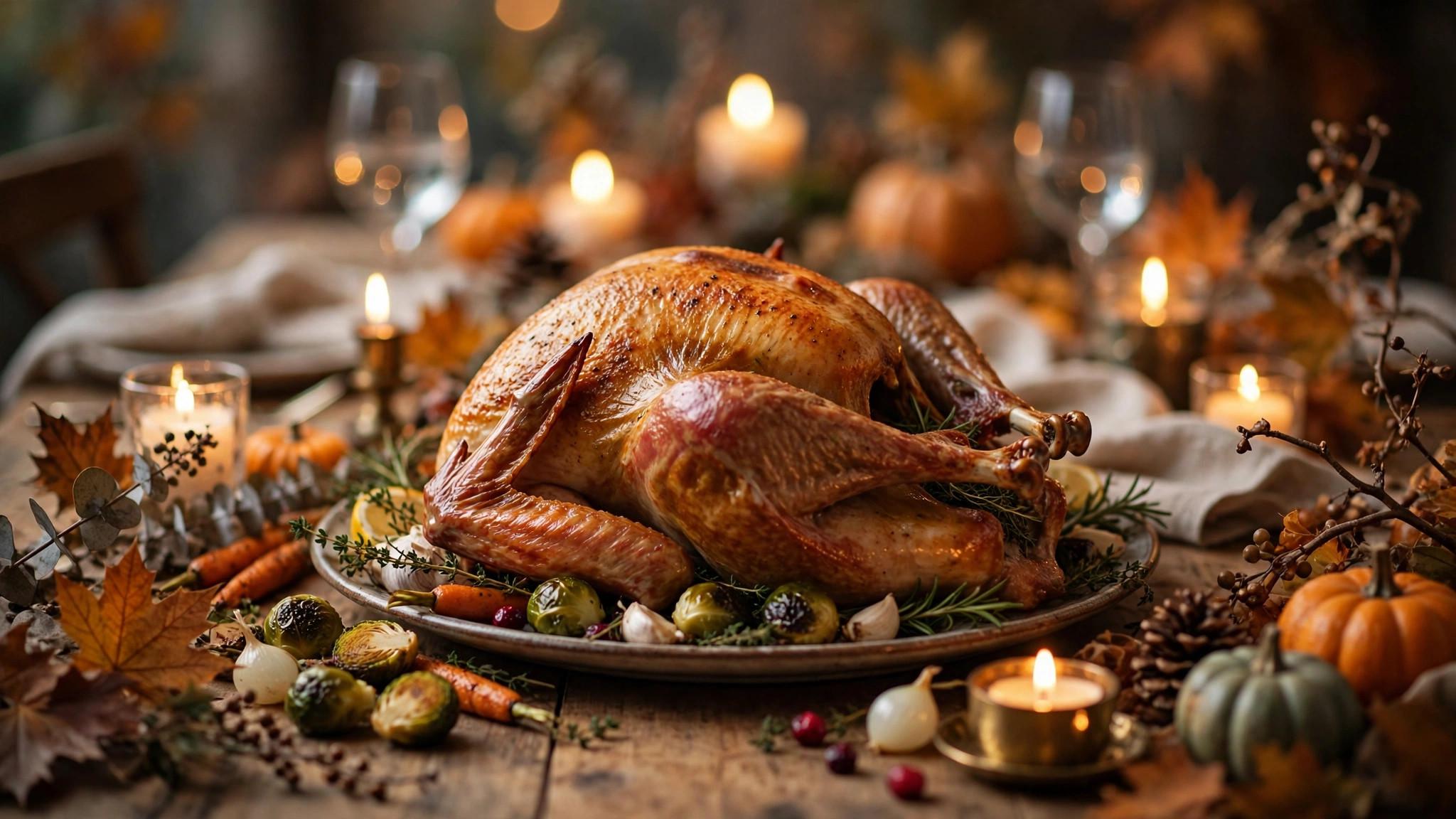

Thanksgiving is Thursday 26 November, and for millions of American families the centrepiece is the turkey — also, quietly, one of the most dangerous dishes a home cook will handle all year. Raw turkey can carry bacteria that cause foodborne illness, and the bird's sheer size plus the chaos of a holiday kitchen create plenty of chances for things to go wrong.
The good news: safe turkey comes down to a handful of rules about thawing, cooking temperature and leftovers. Follow them, and the only thing anyone will remember about dinner is how good it tasted.
How Should You Thaw a Turkey Safely?
Thawing is where food safety starts. A frozen turkey must be thawed in the refrigerator, in cold water, or in the microwave. Never thaw a turkey on the kitchen counter or in the sink at room temperature: the outside of the bird warms up and enters the temperature zone where bacteria multiply quickly, while the inside is still frozen solid.
Refrigerator thawing is the safest method, but it takes time: allow roughly 24 hours for every 4 to 5 pounds, keeping the bird in its packaging on a tray so juices cannot drip onto other food. A large turkey can need several days, so start early — a bird still frozen on Wednesday night cannot be fixed by Thursday morning.
Cold water is faster: submerge the wrapped turkey, changing the water every 30 minutes, allowing about 30 minutes per pound. Cook the turkey promptly once thawed, and never refreeze one thawed in cold water or the microwave.
What Temperature Should a Turkey Reach?
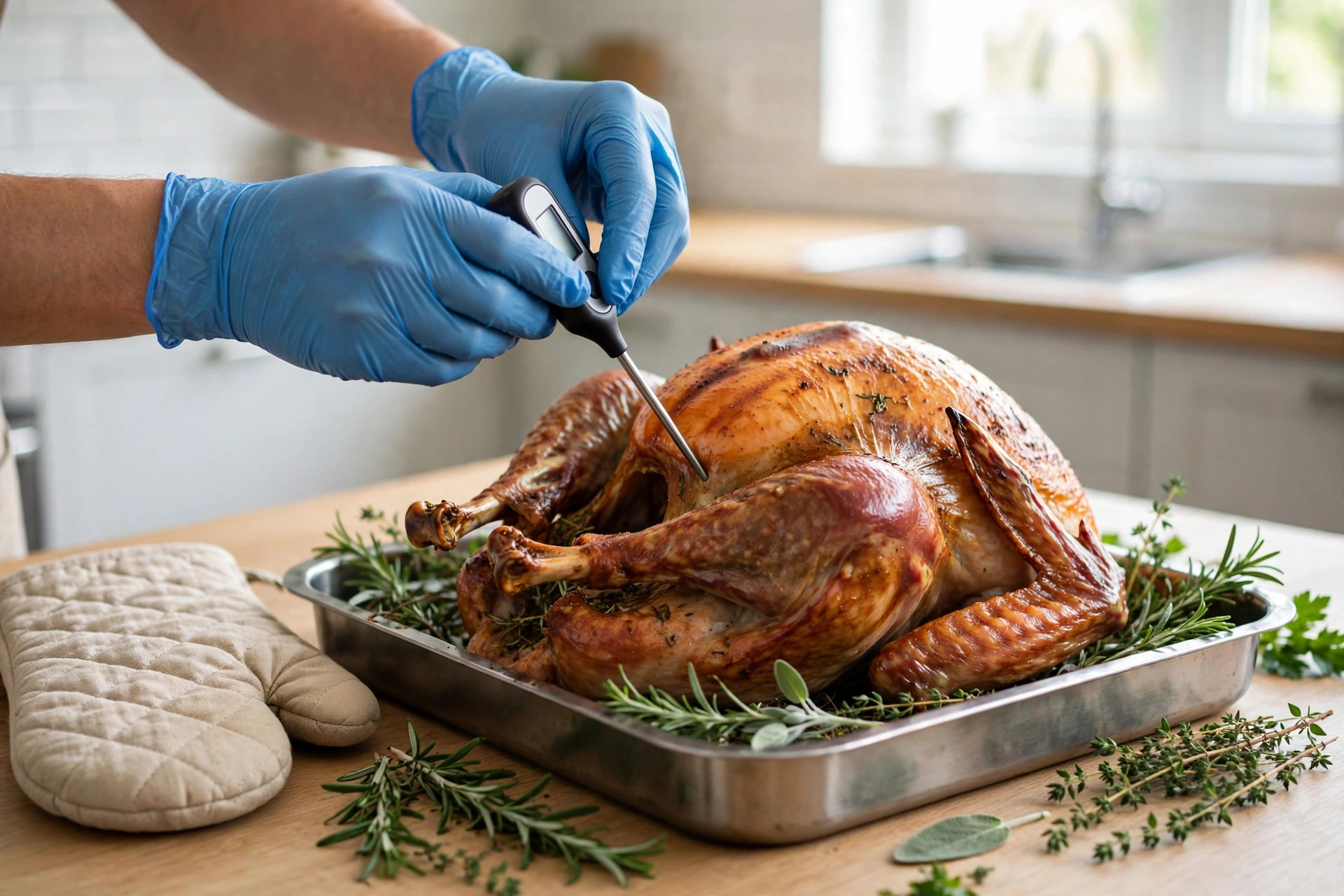
This is the single most important number in Thanksgiving food safety: 165°F (74°C). A turkey is only safe to eat when every part of it — the breast, the thigh, the wing and the centre of the stuffing, if you stuff the bird — reaches 165°F.
That means you need a food thermometer — colour and cooking time alone are not reliable guides, because ovens and birds vary. Insert it into the thickest part of the thigh without touching the bone, then check the breast and wing as well.
A few habits make the difference:
Wash your hands, not the turkey. Rinsing raw poultry spreads bacteria around the sink and kitchen in tiny water droplets. Cooking kills the bacteria; washing spreads them.
Keep raw turkey away from ready-to-eat food. Use separate cutting boards and utensils for the raw bird and for salads, bread and desserts.
Cook stuffing separately if you can. Stuffing cooked inside the bird must also reach 165°F, which often means the turkey itself is overcooked by the time the stuffing is safe. Cooking it in a separate dish is simpler and safer.
Rest before carving. Let the turkey rest about 20 minutes after it leaves the oven, then carve and serve.
How Long Can Thanksgiving Leftovers Stay Safe?
Leftovers are half the joy of Thanksgiving — but they have a strict clock. Cooked turkey and other perishable dishes should be refrigerated within 2 hours of coming out of the oven. On a warm day, or if food has been sitting out on a buffet table, that window shrinks to 1 hour.
Once refrigerated, eat leftovers within 3 to 4 days — turkey served on Thursday should be finished or frozen by Sunday or Monday. Store them in shallow containers so they cool quickly, reheat thoroughly to 165°F, and bring soups, gravies and sauces to a rolling boil.
When in doubt, throw it out. Food that has been sitting at room temperature for hours, or leftovers older than 4 days, are not worth the risk — no matter how good they still smell.
Who Is Most at Risk From Foodborne Illness?
Most healthy adults who eat undercooked turkey will have a miserable few days and recover. But for some people, foodborne illness can be serious. Young children, older adults, pregnant women and anyone with a weakened immune system are at higher risk of severe illness — and they are exactly the people most likely to be sitting around a Thanksgiving table.
That is one more reason to take the temperature rules seriously — with a measles outbreak already putting families on alert this Thanksgiving week, the last thing any household needs is a preventable case of food poisoning on top of everything else.
What Else Can Go Wrong on Thanksgiving Day?
Food safety is not only about the turkey. A few common holiday mistakes are worth avoiding:
The crowded fridge: A packed refrigerator warms up, and warm food spoils faster. Make room before the big day, and use coolers with ice for drinks so the fridge stays cold for perishables.
The double-dip: Serving dishes that sit out for hours while guests graze is a classic risk. Put small amounts out at a time and refill from the fridge.
The tired cook: Thanksgiving is stressful, and stress makes mistakes more likely. Financial stress and poor sleep already take a toll on health around the holidays — so plan the cooking schedule in advance, write down the key times and temperatures, and ask for help rather than doing everything alone.
Final Thoughts
Thanksgiving is about gathering, gratitude and good food — not about spending the weekend ill. Thaw in the fridge or cold water, cook every part to 165°F, check with a thermometer, and get leftovers into the fridge within 2 hours and eaten within 3 to 4 days. Happy Thanksgiving — and cook it safe.
Health disclaimer: This article is for general information only and is not medical advice. Food safety guidance can change, and individual circumstances vary. If you have questions about food safety, a medical condition, or symptoms of foodborne illness, consult a qualified healthcare professional or your local health authority. Seek prompt medical attention if you experience severe symptoms such as persistent vomiting, high fever, bloody diarrhoea or signs of dehydration.