
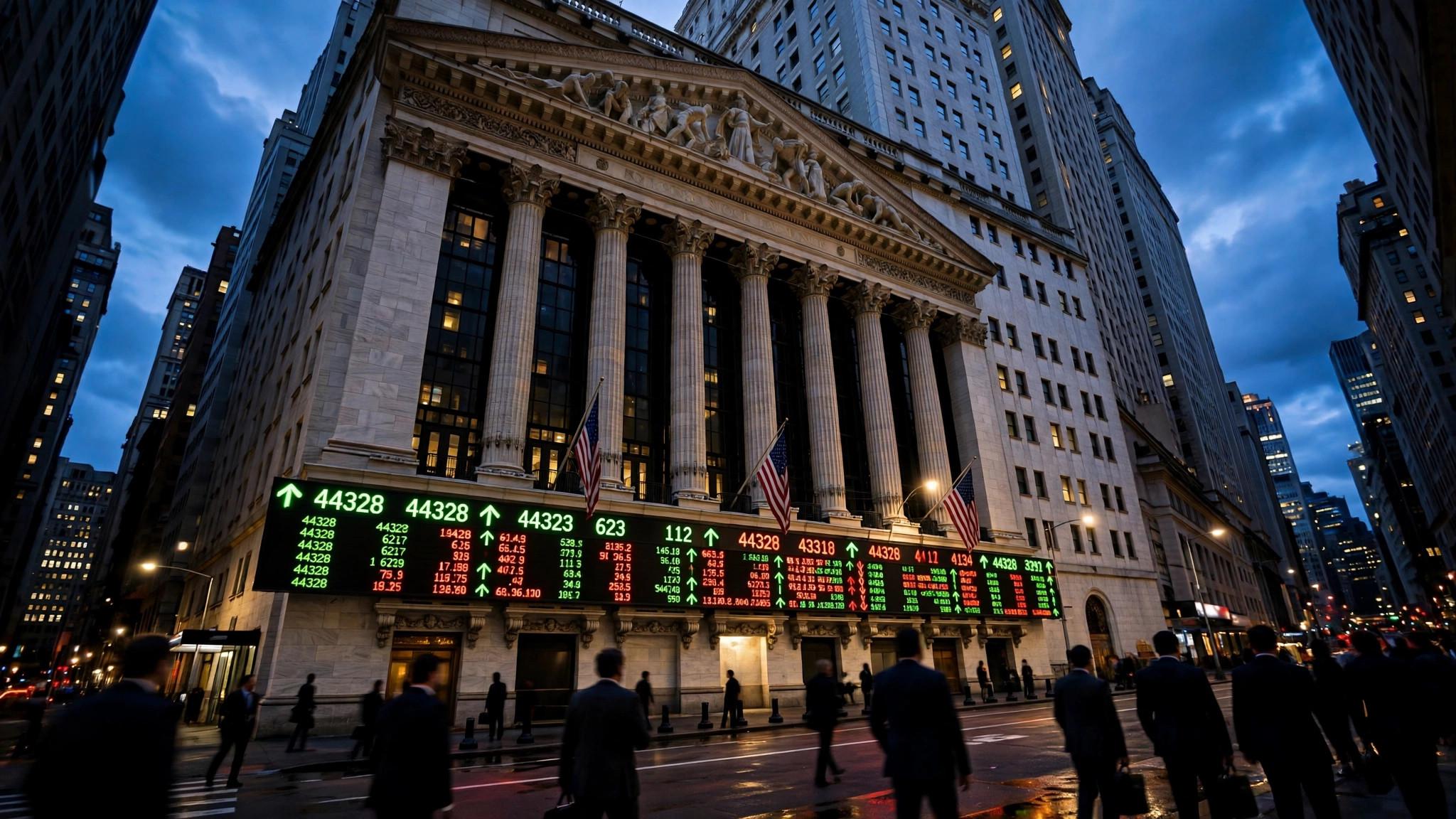

Wall Street delivered a split verdict on Tuesday, 24 November. The Dow Jones Industrial Average climbed 0.85% to close at 50,018.70, reclaiming the 50,000 milestone it had surrendered last week. But the celebration stopped there. The S&P 500 slipped 0.50% to 7,201.09, and the Nasdaq Composite fell 1.48% to 23,733.54, giving back a large part of Monday's historic rally.
The reversal was striking for its speed. A day earlier, the S&P 500 had jumped 4.73% and the Nasdaq 6.51% in one of the best sessions in years. By Tuesday evening, that euphoria had faded, replaced by fresh tariff worries and the possibility that a strong economy could keep interest rates higher for longer.

What Happened on Tuesday?
The gap between the indexes said a lot about where investors' nerves are concentrated. The Dow, packed with older industrial, financial and healthcare names, pushed higher and closed above 50,000. The S&P 500 drifted lower by half a percent, while the Nasdaq, loaded with the artificial intelligence stocks that powered Monday's surge, fell the hardest.
Volatility stayed elevated, with the VIX, Wall Street's fear gauge, at 26.36. Oil was also firm, with West Texas Intermediate crude at $82.05 a barrel and Brent at $91.40.
Why Did the AI Rally Reverse?
Two forces combined to pull the market back. The first was a fresh round of tariff reports: the United States is preparing new Section 301 tariffs covering 16 economies, including China and the European Union. The news hit technology stocks particularly hard: tariffs raise the cost of the components the AI build-out depends on, and a trade fight with both China and Europe raises the risk of retaliation against American exporters.
The second force was the economy looking too strong for the Federal Reserve's comfort. US consumer confidence jumped to 103.3 in November, far above the 92.2 economists had expected and the highest since January 2025. October's figure was revised to 91.9. A confident consumer spends more, and more spending can keep inflation sticky, which makes it harder for the Fed to cut rates.
That combination was the mirror image of Monday's story: the same strong economy that supports corporate profits also supports higher rates. The tariff reports that rattled markets late on Tuesday explain why the Nasdaq fell hardest, since technology supply chains are the most exposed to new trade barriers.
How Does Tuesday Compare With Monday's Historic Rally?
The contrast could hardly be sharper. Monday was a record-book session: the S&P 500's best day since April 2025, the Nasdaq's second-biggest one-day points gain ever, and the Dow up around 1,450 points, all sparked by Nvidia bringing back Jensen Huang as chief executive. Tuesday gave back a chunk of those gains, reminding investors that one great day does not repair a damaged market.
The historic Monday rally, when the S&P 500 jumped 4.7% and the Nasdaq soared 6.5% is still fresh. The rally needed a second day of confirmation, and instead it got a tariff scare and a confidence number that argued against rate cuts.
What Does the Consumer Confidence Jump Mean for Interest Rates?
Consumer confidence at 103.3 is a double-edged number. It says American households feel good about jobs and incomes heading into the holiday season, which is good news for retailers. But it complicates the Federal Reserve's job: minutes from the Fed's October meeting showed almost all officials judged further rate increases likely to be appropriate, and a confident, spending consumer gives them little reason to change that view.
That is why Tuesday's reaction was so uneven. The Dow's old-economy names, which benefit from a strong consumer, held up. The Nasdaq's growth stocks, which suffer most when rates stay high, fell. Until the Fed's direction becomes clearer, that divide is likely to keep showing up.
The broader backdrop has not changed either. Just last week, Wall Street lost around $7 trillion in value in a single week, and the market is still working through the damage.
What Should Investors Watch Next?
The biggest test arrives on Wednesday, 25 November, at 8:30am ET: October's PCE inflation report — the Federal Reserve's preferred measure of price pressures — plus the second estimate of third-quarter GDP. Both will help decide whether the Fed's hawkish stance is justified, and whether Tuesday's pullback was a buying opportunity or the start of another leg down.
The PCE inflation number — a cooler reading could ease rate-hike fears; a hot one could push the Nasdaq lower still.
The GDP second estimate — a strong economy supports profits, but also higher rates.
Tariff headlines — any confirmation or detail on the reported Section 301 tariffs could move technology and industrial stocks fast.
Whether the Dow can hold 50,000 — the milestone is psychological, but losing it again quickly would dent confidence.
Breadth beyond technology — whether buyers keep spreading into the wider market, or whether the rally stays narrow.
Final Thoughts
Tuesday was a reality check after Monday's euphoria. The Dow reclaiming 50,000 shows parts of the market are healing, but the Nasdaq's 1.48% fall, a VIX at 26.36 and fresh tariff worries all point the same way: this market is not out of the woods yet.
The next verdict comes quickly. Wednesday's PCE and GDP data will tell investors whether inflation is cooling enough to let the Fed ease off, or whether the strong confidence number was a warning that rates will stay higher for longer. Until then, expect more days like Tuesday.
Disclaimer: This article is for informational purposes only and does not constitute financial advice. Stock market investing involves risk, including the possible loss of principal. Past performance is not a guarantee of future results. Readers should do their own research or consult a licensed financial adviser before making investment decisions.