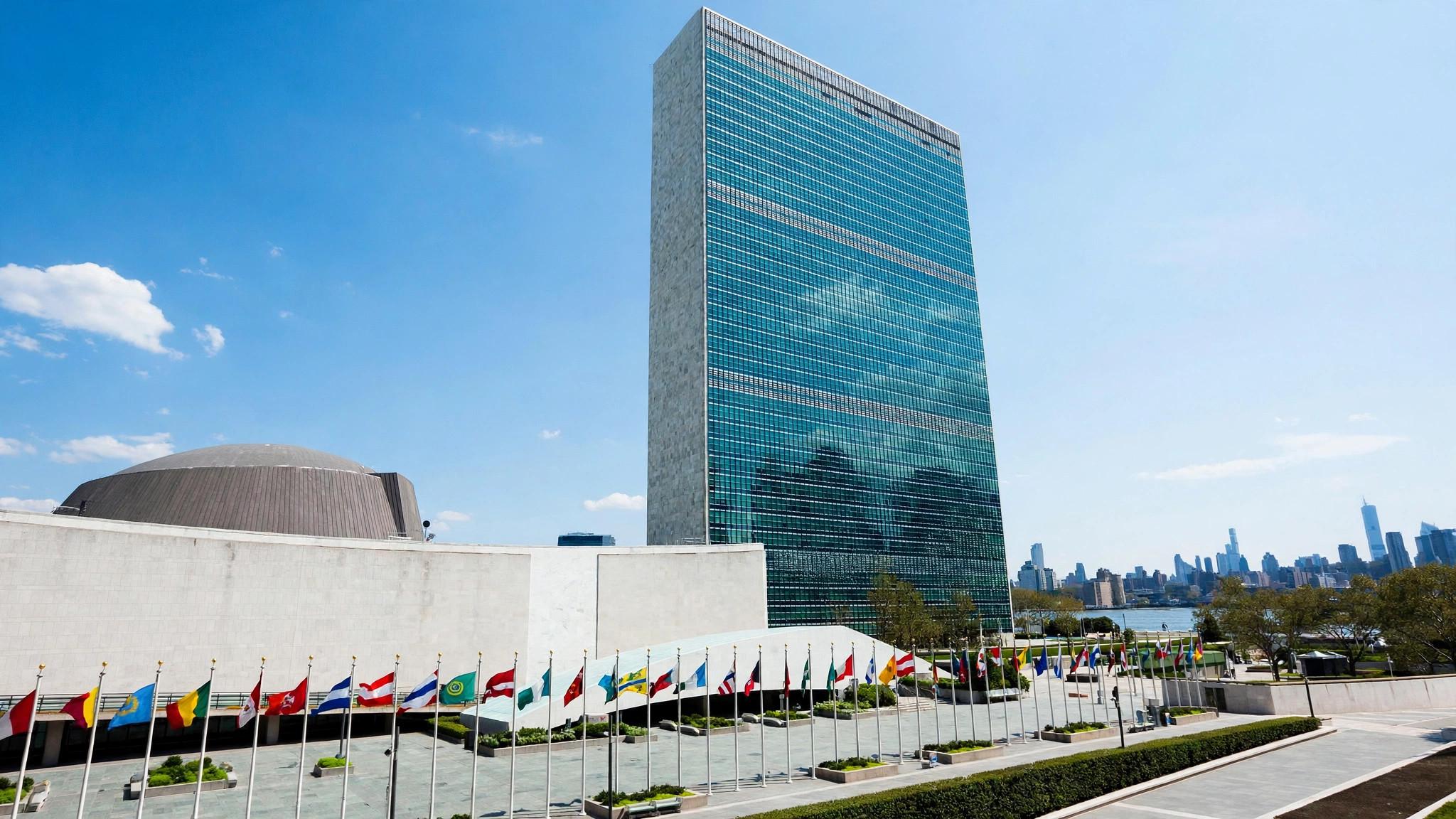
Russia has threatened a NATO member state with "open war" — the most direct warning Moscow has issued against the alliance since the full-scale invasion of Ukraine began. The threat against Estonia came on the same day Ukraine claimed one of its most daring strikes of the war: sinking a Russian warship hundreds of miles from the Black Sea, at a port in Libya.
The two events are not formally linked, but together they show a conflict widening geographically and testing NATO's patience. Estonia is a member of both NATO and the EU, and any attack on it would trigger the alliance's collective defence clause.
What Did Russia Say to Estonia?
Moscow summoned Estonia's envoy on Monday and delivered a blunt message: Estonia's recent actions are "provocative and extremely dangerous" and "on the verge of triggering open war with Russia". The Kremlin accused the Baltic state of a series of hostile acts, including allowing Ukrainian drones to use Estonian airspace to attack Russian targets.
The immediate trigger is Estonia's announcement that it will close its border crossings with Russia for at least six months from 1 December. Tallinn says the closure follows an attempt by Russian security services to set fire to an Estonian defence company — an allegation Moscow denies.
Estonia has not backed down: the closure stands, framed as a security measure, not a provocation. For a country of 1.3 million sharing a 300-kilometre border with Russia, the stakes could hardly be higher.
Why Is NATO Taking This So Seriously?
Because this is not an isolated incident. Russia has been probing NATO's eastern edge all year. According to one count, there have been 25 Russian airspace violations against NATO members in 2026 — more than four times the total recorded in 2024. On 20 November, two missiles and a drone crashed in Poland, and Polish Prime Minister Donald Tusk called it an intentional provocation.
Article 5 obliges allies to respond to an attack on any member, though it does not automatically mean war — each ally decides its own response. That ambiguity is exactly what Russia appears to be testing: how far can it push before the alliance responds as one?
The strain is showing elsewhere too: the COP31 climate talks in Antalya collapsed this week after nearly 50 hours of overtime, with more than 90 nations rejecting a draft text that never mentioned fossil fuels.
Germany added to the sense of alarm this week, saying it is taking seriously reports that Russia may launch a nuclear-armed satellite, identified as Sputnik-S, into orbit later this year. German intelligence says the satellite was assembled several years ago and is based in the Moscow region. Moscow has dismissed the reports as "unfounded allegations" and denied any plans to deploy nuclear weapons in space.
What Happened in Libya?
While the Estonia confrontation was escalating, Ukraine claimed a dramatic success far from its own shores. Kyiv says its naval drones sank the Russian corvette Merkury at the port of Benghazi in Libya, and also hit the Russian dry cargo ship MV Angara, which President Volodymyr Zelensky said had been used to transport weapons.
Ukraine's Security Service followed up with a warning that Russia's fleet has "no safe routes even far beyond the Black Sea". After losing much of its Black Sea fleet, Russia cannot assume its ships are safe anywhere in the Mediterranean.
Libya's Government of National Unity condemned the attack as a violation of its sovereignty and demanded explanations from Kyiv — dragging a third country into the conflict.
What Is Zelensky Asking NATO For?
Speaking to the NATO Parliamentary Assembly in Berlin on Monday, President Zelensky urged the alliance to admit Ukraine, arguing membership would provide the most reliable security guarantee after the war — and that Ukraine could contribute its battlefield experience and military technology.
The call comes as reports suggest Russia's President Vladimir Putin may be open to Article 5-style security guarantees for Ukraine — provided no NATO troops deploy on Ukrainian soil and sanctions are lifted. Whether that is a genuine opening or a negotiating tactic remains unclear. In Washington, a new Democratic House majority of 258 seats — the largest since 1992 — will soon shape US foreign policy and aid decisions.
For now, Ukraine is not a NATO member, so its security depends on the weapons its partners provide. That is why reports that Washington has delayed the delivery of around 60 Patriot air defence interceptors already agreed for Ukraine are causing such concern in Kyiv. Ukraine says it urgently needs more interceptors to counter growing Russian missile and drone attacks.
What Happens Next?
Two dates now matter. On 1 December, Estonia's border closure takes effect — the first test of whether Moscow's "open war" language was a bluff or a warning. And throughout the winter, Ukraine will be watching whether its Western partners deliver the air defences it says it needs.
The pattern of 2026 is that escalation rarely arrives as a single dramatic event. It arrives as a series of probes — a drone here, a border closure there, a ship sunk in a distant port — each one testing what the other side will tolerate. Estonia's border, Libya's harbours and NATO's airspace are now all part of the same test.
Final Thoughts
Russia's threat against Estonia is the sharpest warning yet to a NATO member, and it comes as Ukraine proves it can strike Russian warships far beyond the Black Sea. The alliance's credibility rests on the belief that an attack on one is an attack on all — and Moscow is probing whether that belief still holds. The coming weeks, starting with the border closure on 1 December, will show whether this was rhetoric or the start of something far more dangerous.
Disclaimer: This article is for informational purposes only. The situation described is developing rapidly; details are based on reports available at the time of publication and may change as new information emerges.