
BTBig Tech Earnings Week: Why Investors and Businesses Are Watching Closely
When people see the words “earthquake today” trending, many feel worried right away. Today, “Mexico earthquake today” is climbing on Google Trends, with more than 100,000 searches. But before you panic, it helps to look at what is really happening.
What is going on today?
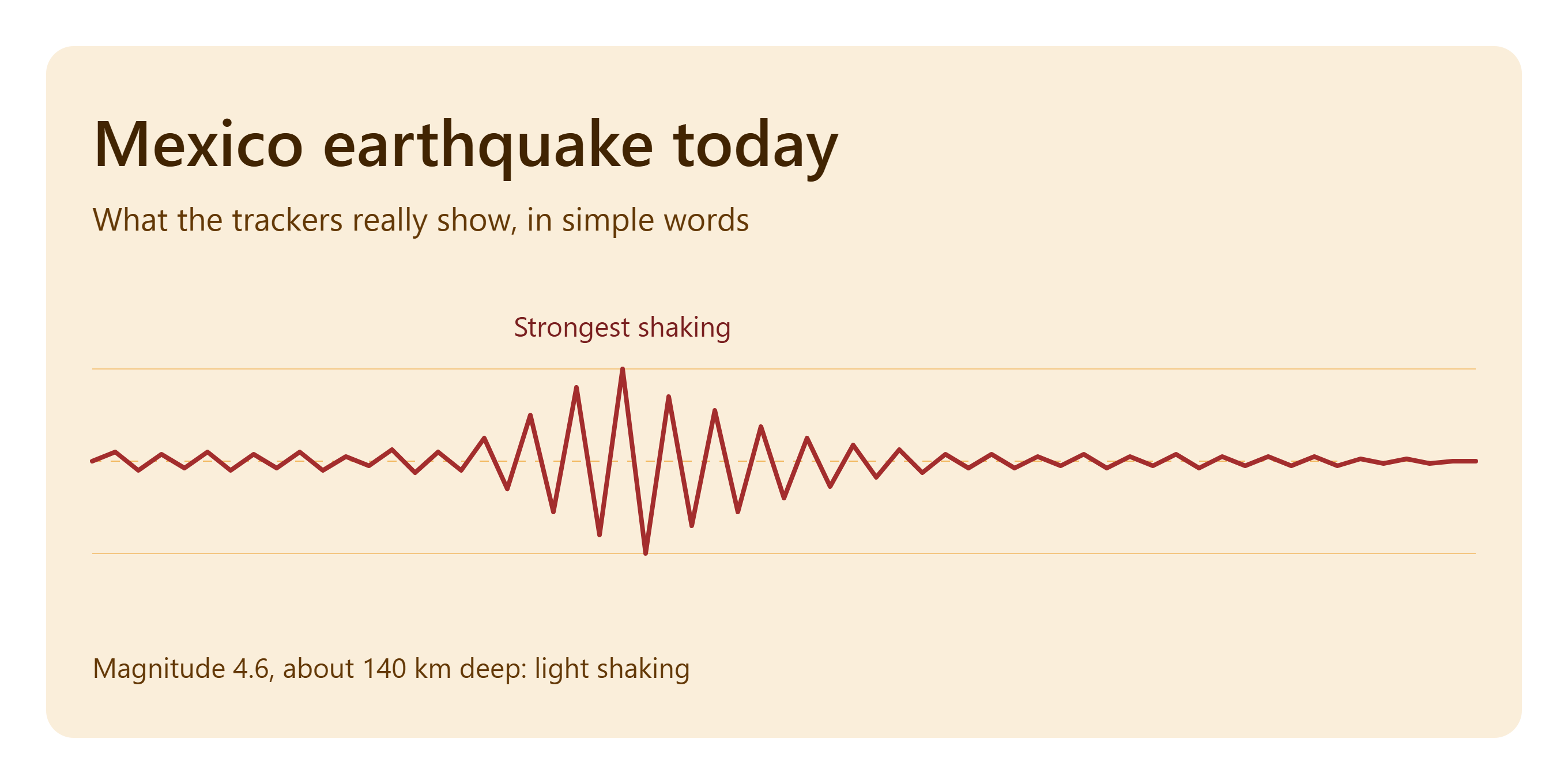
I checked live earthquake trackers, and they show no major disaster. The strongest tremor today was magnitude 4.6, about 140 km underground in Chiapas. A quake that deep and that size usually feels like light shaking and rarely damages buildings. The trackers also list many smaller tremors across the country, which is normal for Mexico.
So why the spike in searches? When people feel even a small shake, they often search right away to check if others felt it too. Search interest can rise fast even when the quake is minor.
Why is Mexico so shaky?
The answer lies deep under the ground. Earth’s outer shell is broken into huge pieces called tectonic plates. They move very slowly, but they never stop.
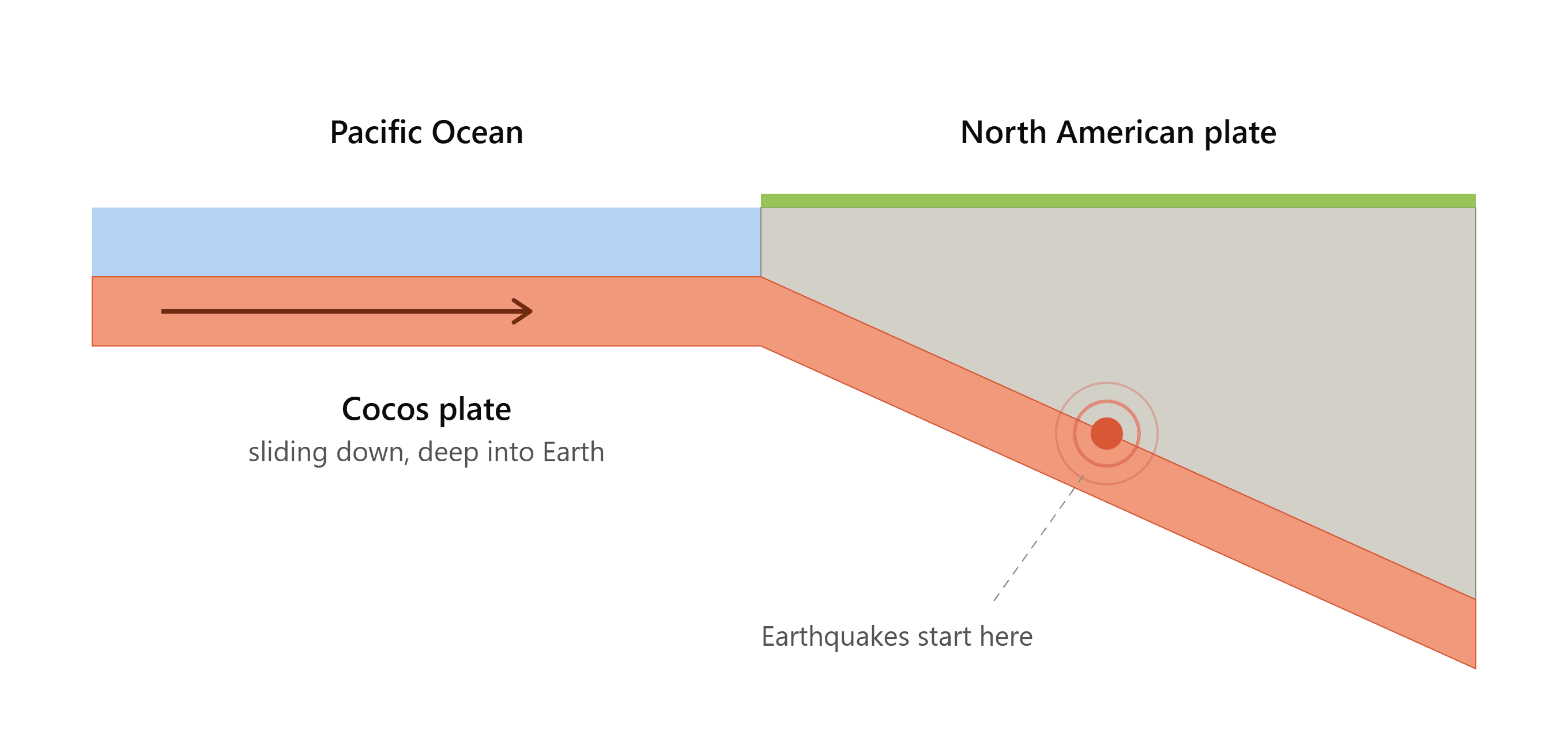
Mexico sits where two of these plates meet. The Cocos plate, under the Pacific Ocean, is sliding beneath the North American plate, which carries Mexico. In that region, the Cocos plate moves about 6 cm every year, roughly as fast as a fingernail grows.
The plates do not glide smoothly. Their rough edges lock together, and pressure builds for years. When the rock finally slips, the energy is released as shaking. That is an earthquake.
How often do quakes happen?
Very often. One live tracker lists Mexico as a very high seismic risk zone, with 143 earthquakes in the last 30 days. Most are far too small for people to notice. Only a few are strong enough to be felt, and very few are dangerous.
Why do deep quakes feel different?
The depth of a quake matters as much as its size. A shallow quake sends strong shaking straight to the surface. A deep one, like today’s, loses much of its force on the way up. This is why two quakes with the same magnitude can feel very different.
Is there a pattern to watch?
Many people ask if small tremors are a warning for a big one. In most cases, no. Scientists cannot predict exactly when or where a large earthquake will happen. Small quakes are simply part of the normal life of a restless region.
That does not mean the risk is zero. Mexico has seen deadly earthquakes before. A 2017 quake near Mexico City caused more than 300 deaths. This history is why Mexico invests in alert systems and why safety drills are common there.
Simple ways to stay safe
You do not need to live in Mexico to learn these habits:
Drop to the ground, cover your head, and hold on to something sturdy.
Stay away from windows, mirrors, and heavy furniture.
If you are outside, move to an open space away from buildings and power lines.
Keep an emergency bag ready with water, a torch, a phone charger, and basic medicine.
Agree on a meeting place with your family.
How to avoid false alarms
Trending topics can spread fear quickly. Before you share a scary post, check a trusted source. The USGS website and local civil protection agencies give accurate numbers and real alerts. If a headline says “massive quake” but the trackers show a small number, wait for confirmation.
Final thoughts
Today’s trend is a good reminder of two things. First, Mexico lives on an active edge of the Earth, so tremors are normal there. Second, being prepared is more useful than being scared. A small plan made today can protect you and your family if a strong earthquake ever comes.
