
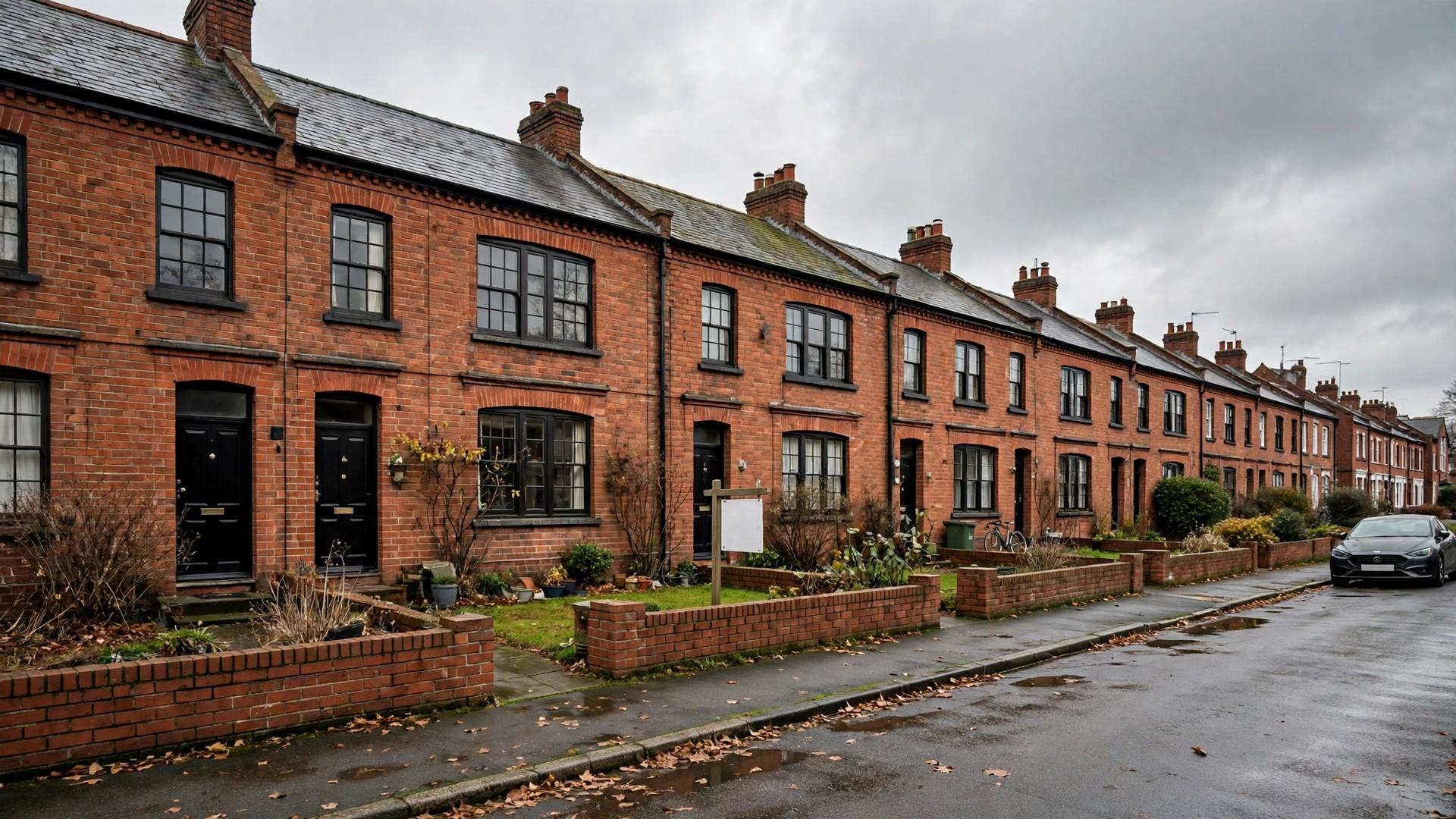

The UK housing market has taken its sharpest turn downwards in three years. Average house prices fell 1.2% in the year to October — the steepest annual decline since October 2023, according to the Lloyds House Price Index. The average property now costs £296,285, down £1,882 (0.6%) in a month, the fourth consecutive monthly fall. At the same time, mortgage approvals have plunged nearly 20% from a year earlier, leaving experts warning sellers who cling to optimistic asking prices risk being left behind.
The slowdown is not a sudden crash but a steady squeeze: borrowing costs have climbed, the Bank of England has raised its base rate, and buyers are disappearing — changing the maths for sellers and for first-time buyers who have waited years for prices to fall.
What Do the Latest Figures Actually Show?
The Lloyds House Price Index, published on 6 November and based on mortgage approvals from Lloyds and Halifax, recorded a 0.6% monthly fall and a 1.2% annual fall — the biggest yearly drop in three years. The picture is not uniform: Nationwide recorded annual growth of 0.5% in October, its weakest since January 2024, while Zoopla put it at 0.8% with an average price of £273,100. The indices measure different slices of the market, but all three agree momentum is fading fast.
The Royal Institution of Chartered Surveyors' September survey showed the price balance at minus 32%, new buyer enquiries down 22% and agreed sales down 18%. The one bright spot is supply: new instructions rose for the first time since mid-2025, and record listings are putting downward pressure on prices.
Why Are Mortgage Approvals Falling So Fast?
Mortgage approvals are the market's early warning system: they show how many buyers have actually secured finance. Bank of England data shows net approvals fell to 53,443 in September, the lowest since December 2023 and almost 20% below a year earlier — the third consecutive monthly fall, from 64,500 in November 2025 to 56,100 in July and 54,900 in August.
The cause is borrowing costs: the effective rate on new mortgages rose to 4.63% in September, and the average new mortgage rate hit 5.89% at the start of November, a three-year high — the average two-year fix is 5.97% and the five-year fix 5.99%, according to Moneyfacts. Then, on 5 November, the Bank of England raised base rate by 0.25 points to 4% — its first increase in more than three years. The surge in US inflation that has put a December rate hike firmly on the table shows the same pressures building across the Atlantic. Around nine in ten mortgages are fixed, but 2.3 million deals expire in 2027, facing a sharp jump in payments on refinancing.
Which Regions Are Falling — and Which Are Still Rising?
The national average hides a divided market. Greater London recorded the largest annual decline, down 3.1% to £524,892, and prime central London prices have now fallen annually for three and a half years. The South East and South West both fell 2.4%, Eastern England 2.3%, and Yorkshire and the Humber 1.0%.
But the north and devolved nations still grow: Northern Ireland leads at 4.4%, Scotland 2.8%, the North West 2.2%, the North East 2.0% and Wales 1.6%. Where prices are lower, buyers can still transact, while the expensive south bears the brunt of higher rates. Zoopla adds that flats are down 2% annually and 35% of postcode areas now show annual falls — weakness is spreading beyond the priciest regions.
What Does This Mean for First-Time Buyers?
For first-time buyers, the news is mixed. Falling prices are welcome after years of being priced out — the average home is nearly £1,900 cheaper than in September. But cheaper homes are no use if the mortgage is unaffordable: the same high rates pushing prices down also push monthly payments up, and borrowing near 6% costs far more each month than at 4%.
There are real openings, though. Record numbers of homes on the market mean more choice and more room to negotiate, and with agreed sales down 9% and demand down 10%, sellers are likelier to accept below-asking offers. Remortgage approvals jumped to 42,600 in September as borrowers rushed to lock in deals. First-time buyers with a deposit saved should negotiate hard and focus on homes sitting unsold — remembering a price cut is only a bargain if the monthly payment still works.
What Should Sellers Do in a Slowing Market?
The message from agents is blunt: realistic pricing is critical. Where prices fall 0.6% a month, a home listed 5% above its true value will chase the market downwards for months. The ECB's leadership change and what it means for interest rates and the euro is a reminder that rates on the continent are moving the same way, so sellers should not count on cheaper money rescuing asking prices.
Sellers who must move should price to sell, not to test the market, and present the property well: in a crowded market, the best-presented home at a fair price sells. Those who can wait may stay put, especially on a low fixed rate — but waiting risks further falls.
Final Thoughts
The UK housing market is not crashing — it is cooling, and the cooling is accelerating. A 1.2% annual fall, approvals at their lowest since 2023 and borrowing costs at three-year highs add up to a market where buyers hold the power. Whether it becomes a deeper correction depends on rates — and with the Bank of England raising rather than cutting, and a $7 trillion market loss still fresh in savers' minds, pressure on prices is unlikely to lift soon.
Disclaimer: This article is for information only and is not financial advice. House prices and mortgage rates can go up as well as down, and regional figures may differ from the national average. Do your own research before making any property or borrowing decision.